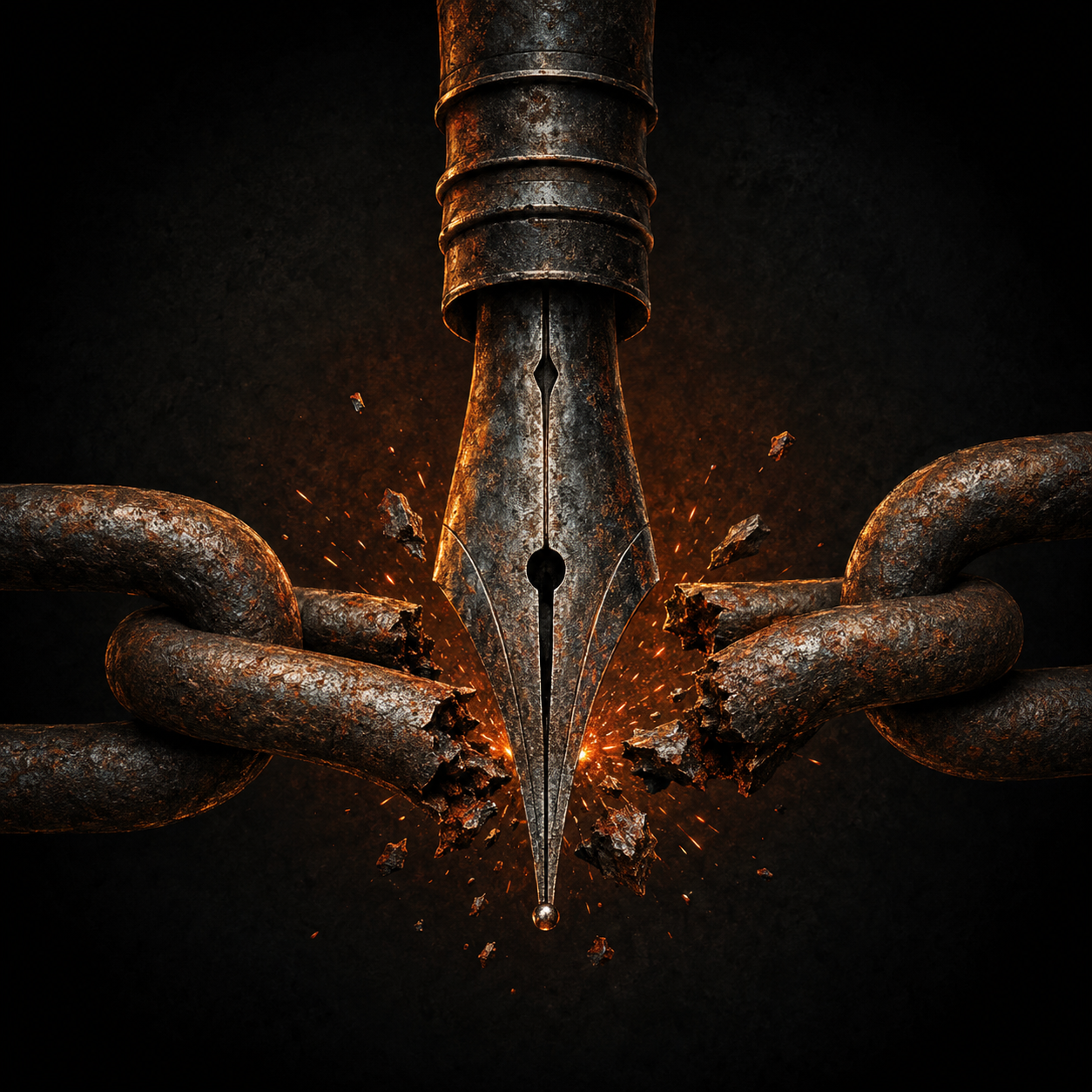
Writ & Rust began with a problem: most stories about wrongdoing leave room for only a villain or a victim. Real life is rarely that cooperative.
We prefer clean stories. We want someone to blame, someone to defend, and an ending that tells us exactly how to feel. We want the guilty to remain guilty in every possible way, the harmed to remain blameless in every possible way, and redemption to arrive on schedule—usually before the final chorus.
But some lives refuse to fit inside those boundaries.
A person can cause harm and still be harmed. A punishment can follow genuine wrongdoing and still become cruel or unjust. Someone can deserve accountability without deserving every humiliation imposed upon them afterward. A person can change without being entitled to forgiveness.
Two truths can stand together. One does not have to erase the other.
That uneasy ground is where Writ & Rust lives.
The name carries two ideas. A writ is something written and entered into the record. It can be an order, a judgment, or a command backed by authority. It represents the official version—the words preserved in files, decisions, and documents that may follow a person long after the moment itself has passed.
Rust is different. Rust is what time leaves behind. It is evidence of exposure, neglect, weather, and wear. It weakens some things and gives others their character. It does not hide what happened to the metal. It becomes part of the surface.
Writ & Rust is about both: what the record says and what remains after years of living beneath it.
The first song released here is called “Not the Hero of This Song.” That title is not false modesty, and the song is not an attempt to collect sympathy by performing remorse. It is an acknowledgment that pain does not create innocence. Suffering does not erase responsibility. Doing better today does not purchase the right to rewrite yesterday.
At the same time, accountability should not require a person to surrender every remaining tomorrow.
That distinction matters.
There is a strange expectation placed upon anyone trying to speak honestly about a damaged past. If you describe what was done to you, people may assume you are denying what you did. If you acknowledge what you did, others may treat every injustice that followed as deserved. If you have changed, saying so can sound self-congratulatory. If you remain silent, the worst chapter becomes the only one anyone is permitted to read.
Writ & Rust will not solve that contradiction by choosing whichever half of the truth is most convenient.
The songs and writing here will deal with consequence, confinement, accountability, survival, and what remains afterward. Some pieces may be uncomfortable. Some may offer no clean resolution. They will not demand forgiveness, manufacture innocence, or turn personal growth into heroism.
They will also reject the idea that human beings must remain permanently frozen as the worst thing they have ever done.
Change is not a medal. It is not proof of nobility. Often, it is simply the debt a person owes after finally understanding the damage behind them. The debt may never be fully paid, but that does not excuse refusing to make the payments.
That is the heart of “Not the Hero of This Song.” It faces the past without asking the listener to erase it. It admits that some wounds cannot be measured and some things can never be repaired. It also insists that taking ownership is not the same as declaring that change can never come.
This journal will continue that work.
There will be stories about institutions and individuals, punishment and responsibility, anger and restraint. There will be songs that come from lived experience without pretending that experience grants moral authority. There may be contradictions, because honest lives contain them. There may be questions left unanswered, because dishonest certainty is not an improvement over honest doubt.
This is not a campaign to rewrite the record.
It is an attempt to tell the whole truth—including what was done, what was endured, and what a person chooses to do with the years that remain.
Welcome to Writ & Rust.
Leave a Reply